


Business Consulting for Veterinary Clinics & Animal Hospitals
Running a veterinary practice means coordinating two things at once: the experience of the client and the operating environment that supports patient care. As demand grows, scheduling, client communication, team handoffs, practice-management systems, administrative follow-up, supplier processes, and management visibility can become harder to keep aligned.
Acumen Business Consulting Inc. helps veterinary clinics and animal hospitals strengthen the business side of the practice through practical operational review, workflow and systems planning, documentation, digital transformation, and implementation-focused support.
Based in London, Ontario. Serving veterinary practices across Canada.
A Busy Veterinary Practice Can Become Harder to Manage Before It Looks “Broken”
Veterinary practices operate in an environment where scheduled appointments, same-day requests, client questions, team availability, administrative follow-up, and unexpected changes compete for attention throughout the day.
A practice may have strong demand and a capable team while still experiencing recurring friction: reception becomes the routing point for too many decisions; urgent requests interrupt planned work; different appointment types are handled inconsistently; staff depend on informal handoffs; client follow-up is difficult to track; or the owner and practice manager remain the people who resolve every exception.
The visible symptom may be a crowded schedule, too many calls, staff pressure, or a feeling that the practice is constantly reacting. But the underlying problem may be different — unclear routing rules, poor workload visibility, fragmented systems, weak handoffs, or an operating model that still depends on the habits of a smaller practice.
The first question is therefore not simply, “How do we handle more appointments?” It is: “What needs to change so the business side of the practice can absorb demand without creating unnecessary workload and management dependency?”
Acumen helps veterinary practice owners and leadership teams identify those constraints and decide which operational improvements are worth addressing first.

How Acumen Supports Veterinary Clinics & Animal Hospitals
Veterinary practices differ by species focus, services, hours, team structure, facility model, technology, and growth stage. Acumen doesn't assume one operating model fits every clinic. We examine the business environment around the practice's established clinical processes and help improve the parts that can be made clearer, more consistent, and easier to manage.
Daily operations and bottleneck review
Client-contact and demand-routing workflows
Scheduling and appointment-flow planning
Workflow design, SOP development, and role clarity
Practice-management system planning
Client communication and follow-up processes
Non-regulated inventory and supplier workflows
Management visibility and reporting
Multi-location coordination and standardization
Growth and capacity planning
Website and digital presence support
Acumen supports the business, operational, digital, documentation, planning, and implementation side of veterinary practice management.
We do not provide veterinary regulatory opinions, controlled-drug or drug-inventory compliance advice, or other regulated professional services. Where clinical, regulatory, legal, accounting, privacy, cybersecurity, or other specialized expertise is required, the appropriate qualified professional remains responsible for that work.
The Client Journey and the Internal Practice Workflow Have to Move Together
A veterinary clinic does not have only one operational flow. There is a client-facing journey — calls, booking, forms, communication, payment, reminders, and follow-up — and an internal practice workflow involving veterinarians, technicians or assistants, client-care staff, management, systems, rooms, information, and recurring administrative tasks. Operational problems often appear when those two flows stop moving together.
The objective isn't to redesign veterinary care. It's to reduce the operational gaps around care that consume staff capacity, create avoidable client-service friction, or keep management unnecessarily involved in routine coordination.

Practice-Management Systems Should Support the Day the Clinic Actually Has
Veterinary technology is most useful when it supports real operating conditions rather than forcing the team to build workarounds around the software.
A practice may use a practice-management platform alongside online booking or request tools, phones, client communication systems, forms, payment tools, reporting dashboards, supplier systems, websites, and other applications. The problem is not necessarily that any one tool is inadequate. The problem may be what happens between them.
Client information may be entered more than once. Staff may need to check several places to understand the status of a request. Online requests may create a second workflow rather than simplifying the first. Reporting may require manual reconciliation. Important tasks may remain in inboxes or informal notes because the main system does not make them visible in the way the team needs.
Acumen approaches technology from the operating model outward. This may include:
Mapping how client and administrative information moves through the practice
Identifying duplicate entry, disconnected steps, and manual workarounds
Defining operational requirements before purchasing or replacing technology
Evaluating how online requests, forms, communication tools, and core systems fit together
Developing practical vendor-comparison and decision criteria
Documenting workflow, reporting, and integration requirements
Identifying suitable non-clinical automation opportunities
Planning implementation, transition, documentation, and team adoption
Considering how systems should support additional veterinarians, teams, or locations
The goal isn't to add more technology — it's to reduce the coordination the team has to do because the technology doesn't match the workflow.
The same discipline applies to AI. Acumen can help identify business-side and administrative use cases, map the underlying workflow, define requirements, compare tools, and plan implementation. Clinical use, medical records, confidentiality, privacy, cybersecurity, and data governance remain for the practice and appropriate qualified professionals or technology providers to assess.

Team Coordination Is a Capacity Issue, Not Just a Documentation Issue
Veterinary practices rely on different roles contributing at different points in the same day. When business-side responsibilities are unclear, the practice can lose capacity even when everyone is working hard: routine questions move upward, experienced staff become the default source of operational knowledge, tasks stay with veterinarians or managers because no clear handoff exists, and different shifts solve the same problem differently.
Acumen helps improve the business-side coordination around those roles through:
Mapping recurring administrative workflows and handoffs
Clarifying business-side ownership of routine tasks
Documenting SOPs and exception paths
Developing onboarding documentation and operational checklists
Identifying where recurring decisions can be standardized or delegated
Reducing unnecessary escalation to owners, managers, or veterinarians
Improving shift-to-shift or team-to-team operational continuity
Standardizing appropriate business practices across locations where useful
Acumen doesn't determine veterinary scope of practice, delegation of clinical activities, professional supervision requirements, or which clinical tasks particular regulated team members should perform. Those decisions remain with the practice and appropriate veterinary professionals. Our focus is the operating structure around the work — who owns the business task, what information they need, what happens next, and how the process stays visible when the day gets busy.
Capacity Is More Than the Number of Appointment Slots
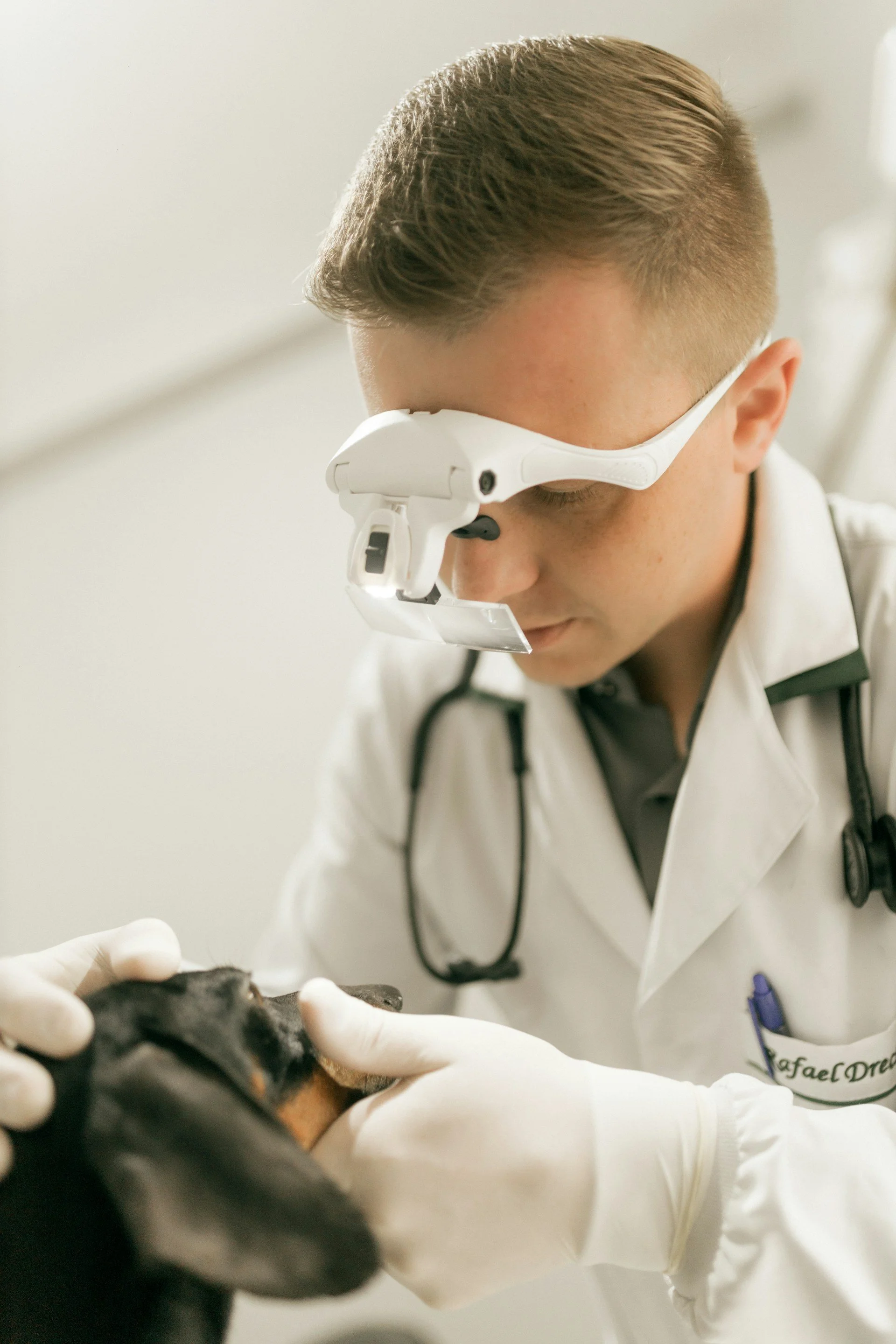
A practice can appear fully booked and still have very different capacity problems underneath the schedule — client-contact volume at the front desk, uneven support coverage, too many manual follow-ups, unclear handoffs, limited room or system visibility, or too much dependence on the owner or managing veterinarian. Growth planning shouldn't begin with appointment volume alone.
Acumen can help examine business-side capacity questions such as:
Where does work repeatedly queue or wait?
Which administrative tasks consume disproportionate staff time?
Which routine decisions still require management involvement?
Where do urgent or same-day requests disrupt established workflows?
Which handoffs create repeated clarification or rework?
What processes would become fragile if another veterinarian or location were added?
This creates strategic choices — adding a veterinarian, increasing support capacity, extending hours, improving existing workflow, introducing new technology, or preparing for another location. Each solves a different constraint and carries different costs. The objective isn't simply to make the practice busier; it's to build an operating model that can absorb growth without increasing complexity at the same rate.
If the underlying constraint is not yet clear, a structured operations diagnostic provides a starting point to identify what is limiting the practice, establish priorities, and determine which intervention deserves attention first.

Who This Service Is For
This service may be a strong fit for:
Growing multi-veterinarian practices
Established clinics where the day has become increasingly reactive or difficult to coordinate
Practices experiencing high client-contact or administrative workload
Clinics where urgent or same-day demand regularly disrupts routine workflows
Practices adding veterinarians, technicians, assistants, or managers
Owners or managing veterinarians who remain involved in too many routine decisions
Practices with inconsistent handoffs between front-desk, support, clinical, and management roles
Practices relying heavily on email, manual lists, spreadsheets, or disconnected systems
Clinics considering changes to practice-management, communication, booking, or workflow technology
Multi-location veterinary groups needing clearer operating consistency and management visibility
Practices preparing to increase capacity, add a location, or integrate an acquired practice
Practice size alone doesn't determine fit. A single-location clinic with high operational complexity or significant owner dependency may have a stronger need than a larger group whose systems and management structure already work effectively.
Where to Start
Veterinary practices don't always arrive with a clearly defined project.
You may know that the schedule is under pressure, the team is overloaded, the owner is involved in too many decisions, profitability is disappointing, or a major investment is being considered — without yet knowing what's actually causing the problem.
When the underlying problem or priority is not yet clear
The Veterinary Practice Operations Diagnostic is the structured starting point. It examines the business and operating system of the practice to identify the most important constraints, understand their underlying causes, and determine what should be addressed first.
When the problem and required work are already reasonably clear
Acumen can scope a focused consulting engagement around the specific need — workflow redesign, SOP development, systems planning, digital transformation, implementation support, management processes, or another defined business-side improvement.
How Our Process Works
Acumen uses a staged approach so the practice can understand the problem before committing resources to unnecessary changes.
Not every engagement requires every stage. The scope should match the business problem being solved and the value of solving it.
Why Work With Acumen
Acumen helps veterinary practice owners and leadership teams strengthen the business infrastructure surrounding practice operations — administrative workflows, systems, documentation, team coordination, management visibility, and growth-related operational planning.
Our relevant experience includes supporting medical practices and small clinics with business consulting, digital transformation planning, workflow documentation, system-selection support, and implementation planning. Veterinary practices have their own clinical and professional requirements, but what's relevant from our broader practice-based work is experience addressing the non-clinical operating problems that emerge when appointment demand, administrative work, team handoffs, systems, and owner involvement become harder to manage consistently.
Projects are led directly by Acumen's co-founders, so clients work with the people responsible for understanding the engagement, developing the recommendations, and helping guide implementation.
Acumen remains focused on the business side of the practice. Veterinary clinical care, professional regulation, and other specialized or regulated matters remain with the appropriate qualified professionals.
Frequently Asked Questions About Veterinary Practice Business Consulting
-
No. Acumen doesn't recommend treatment, determine clinical priority or triage, advise on prescribing or dispensing, or interpret veterinary professional requirements. Our role is business operations, administrative workflows, systems, documentation, capacity, digital transformation, and implementation support.
-
Yes, from an administrative and workflow perspective — how requests are received, routed, and tracked. We don't determine whether a patient is urgent or make clinical care decisions.
-
Yes — the business rules, responsibilities, handoffs, and system configuration around your established appointment model. Clinical decisions about case priority or treatment remain with the veterinary team.
-
Yes, for business and administrative responsibilities — workflow mapping, ownership of recurring tasks, handoffs, and SOPs. We don't determine scope of practice, delegation of veterinary care, or professional supervision requirements.
-
Yes — requirements, pain points, decision criteria, option comparison, integration considerations, and implementation planning. Clinical, privacy, cybersecurity, and technical requirements should be validated by the practice and relevant professionals or vendors.
-
Yes — identifying use cases, mapping workflow, defining requirements, evaluating tools, and planning implementation. Clinical use, confidentiality, privacy, and data governance remain with the practice and appropriate professionals.
-
Yes, for non-regulated supplies and retail inventory — ordering, receiving, stock visibility, and supplier coordination. We don't advise on prescribing, dispensing, or drug-inventory compliance.
-
No. The better indicator is whether there is a meaningful operational, systems, management, capacity, or growth problem to solve — and that can apply to a single-location clinic or a multi-location group.
-
This page describes the broader range of business-side consulting support Acumen provides to veterinary practices. The Veterinary Practice Operations Diagnostic is a structured standalone engagement for situations where the underlying constraint, root cause, or priority isn't yet sufficiently clear. If the problem has already been defined — for example, the practice knows it needs workflow redesign, SOP development, technology evaluation, or implementation support — that work may be scoped directly, without completing a broader diagnostic first.
Related Services



Build a Veterinary Practice That Can Handle Growth Without Becoming Harder to Run
A growing practice shouldn't have to choose between serving more clients and maintaining operational control. As demand, team size, systems, or locations increase, the business infrastructure around veterinary care needs to become clearer, more visible, and less dependent on constant management intervention.
Acumen helps veterinary clinics and animal hospitals strengthen that infrastructure through operational review, workflow and systems planning, documentation, digital transformation, capacity planning, and implementation-focused support.
Book a free discovery call to discuss what's making the business side of your practice difficult to manage and determine whether Acumen is the right fit to help address it.