

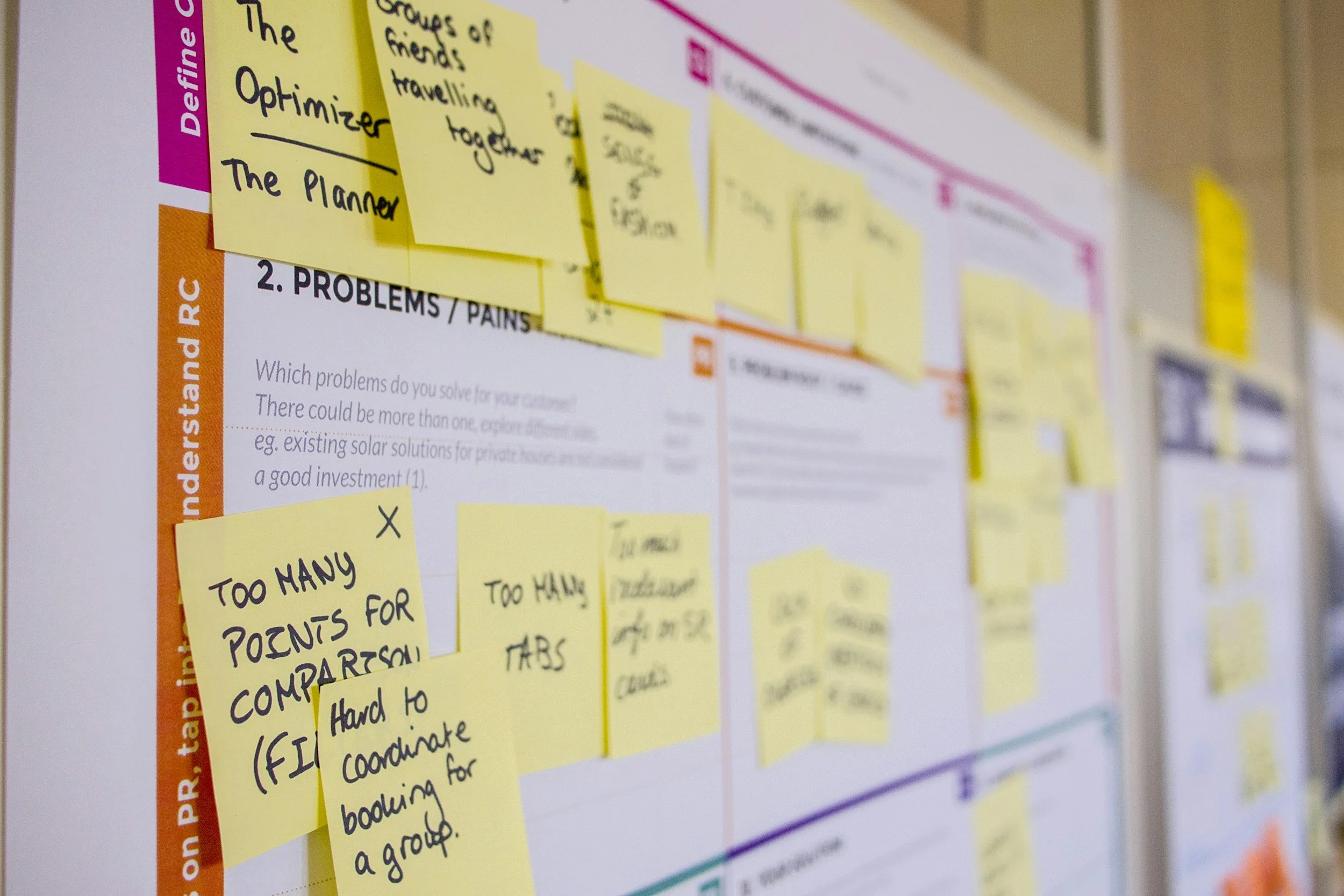
Process Optimization
When a business starts relying on workarounds, repeated follow-ups, manual handoffs, unclear responsibilities, and owner intervention, the problem is rarely a lack of effort. The operating model itself may no longer support the volume, complexity, or service expectations of the business.
Acumen Business Consulting Inc. helps small and mid-sized businesses across Canada examine how work is currently performed, identify operational friction, redesign priority processes, and implement more practical ways of working.
The objective is not to make every process more complex or more automated. It is to make the right work clearer, more consistent, easier to manage, and better aligned with the business’s capacity and goals.
When Work Feels Heavier Than It Should
Operational problems are not always dramatic. They often appear as small delays, repeated questions, inconsistent customer experiences, tasks that depend on one person’s memory, or work that must be checked several times before it is complete.
Over time, these issues create hidden costs. Employees spend more time coordinating than doing the work itself. Owners become the default problem-solver. Customers experience delays or inconsistency. Growth becomes harder because the business cannot increase volume without adding more effort, more supervision, or more people.
Process optimization begins by making the current operating reality visible. Acumen helps identify where work slows down, where responsibilities are unclear, where information is lost, where decisions are repeated, and where the process no longer supports the intended outcome.

Who This Service Is For
This service is intended for businesses that have functioning operations but know that the current way of working is creating unnecessary friction, inconsistency, or dependency. It may be suitable for:
Businesses experiencing repeated delays or bottlenecks
Teams with unclear roles or handoffs
Owners who remain involved in too many day-to-day decisions
Companies relying heavily on spreadsheets, email, memory, or manual follow-up
Businesses with inconsistent service delivery
Teams repeating the same corrections or rework
Companies preparing to grow, hire, or add locations
Organizations introducing new systems or technology
Businesses that need to reduce operational complexity
Teams that have processes but no shared operating standard
The service is most valuable when the business is prepared to provide access to the people, information, documents, and workflows required to understand how work actually happens.
If the symptoms are visible but it is not yet clear whether the underlying constraint involves processes, management, capacity, owner dependency, systems, or a combination of factors, the Business Scaling & Operations Diagnostic may be a better starting point.

What Process Optimization May Address
Process optimization can focus on a single high-priority workflow or a broader operating area depending on the scope of the engagement. Common areas may include:
Customer intake and onboarding
Sales-to-delivery handoffs
Scheduling and capacity management
Internal approvals
Service delivery
Purchasing and supplier coordination
Inventory and order management
Billing and payment processes
Client communication and follow-up
Document and information flow
Team responsibilities and escalation paths
Quality-control checks
Repetitive administrative work
Owner dependency
Cross-functional coordination
Post-sale or post-service follow-up
The goal is not to change every process. The goal is to identify the areas where improvement will create the most practical operational value.

Process Optimization Is Not Just Automation
Automation can be useful, but automating a weak or unclear process often makes the problem faster rather than solving it.
Before recommending technology, Acumen examines the logic of the process itself. We consider whether the steps are necessary, whether responsibilities are clear, whether information is captured at the right point, whether approvals add value, and whether the workflow supports the intended customer and operational outcome.
Some problems are best addressed through clearer roles, simpler steps, better documentation, or improved decision rules. Others may benefit from software, integration, forms, notifications, or automation.
Technology is treated as one possible tool within the improvement process—not the default answer.

What the Service May Include
The exact scope depends on the business, operating issue, number of processes involved, available information, and implementation requirements. Our support may include:
Current-state process review
Stakeholder interviews or working sessions
Workflow observation and document review
Bottleneck and friction-point identification
Role and responsibility review
Handoff and approval analysis
Rework, duplication, and delay analysis
Owner-dependency assessment
Process-priority assessment
Future-state process design
Decision-rule and escalation clarification
Responsibility and accountability mapping
Workflow documentation
SOP recommendations or development
Technology and automation opportunity assessment
Implementation roadmap
Change and adoption support
Pilot testing and refinement
Performance-measure recommendations
Post-implementation review
Not every engagement includes every component. The scope is tailored to the operational issue and the level of implementation support required.
Process Optimization vs Workflow Design & SOP Development
Process Optimization focuses on understanding and improving how the business operates. It examines the current workflow, identifies friction, clarifies the desired future state, and determines what should change.
Workflow Design & SOP Development focuses on documenting how the improved process should be performed. It converts the agreed operating model into clear workflows, responsibilities, procedures, instructions, and supporting documentation.
The two services are closely connected but not identical.
A business may begin with process optimization when it is not yet clear what the right process should be. Once the future-state process is agreed, workflow and SOP documentation can be developed to support implementation, training, consistency, and accountability.
In some engagements, both services are delivered as one coordinated project.
Prefer to build your team’s process improvement skills?
If you want employees to learn how to map workflows, investigate causes and evaluate improvements themselves, explore our Business Process Improvement Training. Choose consulting when you need Acumen to lead the analysis, redesign or agreed implementation work.
Our Process Optimization Approach
Implementation and Change Support
A redesigned process has limited value if the team does not understand it, use it, or have the tools required to follow it.
Acumen can support implementation by helping the business communicate the change, clarify responsibilities, prepare workflows and SOPs, configure tools, test the new process, and address practical issues as they appear.
Change is usually introduced in manageable stages rather than through a sudden full-scale replacement of existing operations.
The level of implementation support is agreed as part of the engagement. Ongoing monitoring or post-project support is not assumed to be unlimited and is scoped separately where required.
DISCLAIMER
Professional Service Boundaries
Acumen Business Consulting Inc. provides operational analysis, process design, business documentation, implementation planning, technology assessment, and project coordination.
Acumen does not independently provide legal, tax, accounting, engineering, clinical, safety certification, regulatory approval, or other licensed professional services.
Where a process involves regulated, technical, legal, financial, clinical, privacy, health and safety, or industry-specific requirements, the relevant qualified professional remains responsible for their advice, approval, validation, or compliance determination.
Process recommendations are based on the information available during the engagement. Improvements in cost, capacity, speed, quality, productivity, or customer experience cannot be guaranteed because results depend on implementation, adoption, data quality, internal capacity, and operating conditions.
Process Optimization Questions for Small Businesses
-
Common signs include repeated delays, unclear responsibilities, excessive follow-up, duplicated work, inconsistent outcomes, manual workarounds, frequent corrections, owner dependency, and difficulty handling increased volume.
A process review can help determine whether the issue is caused by workflow design, roles, information, technology, capacity, or another operational factor.
-
Acumen can support both assessment and implementation.
Some clients require a current-state review and improvement roadmap. Others need future-state workflows, SOPs, technology changes, automation, implementation support, and follow-up review.
The level of support is defined in the project scope.
-
Some change is unavoidable, but the work should not create unnecessary disruption.
We typically prioritize the highest-value issues, introduce changes in manageable stages, test where appropriate, and adjust the implementation plan around the business’s operational capacity.
-
No. Some operational problems are better solved through clearer responsibilities, fewer steps, better information flow, improved documentation, or different decision rules.
Automation is recommended only where it supports a process that is already clear enough to automate.
-
Process optimization determines how the work should be improved.
SOP development documents how the agreed process should be performed consistently. A business may require one service or both depending on whether the operating model is already clear.
-
Potentially. We can examine which decisions, approvals, relationships, or tasks depend unnecessarily on the owner and identify opportunities to clarify responsibilities, improve delegation, document processes, and strengthen operating controls.
Reducing owner dependency requires both process changes and management commitment.
-
Timelines depend on the number of processes, stakeholder availability, complexity, documentation quality, technology requirements, and implementation scope.
A focused workflow review may take several weeks, while a broader operational redesign and implementation project may require a longer engagement.
-
No. Acumen can identify and support practical improvement opportunities, but final results depend on implementation quality, adoption, operating conditions, available data, management decisions, and internal capacity.
Where measurable indicators are available, they can be used to track progress after implementation.
Related Services



Make the Work Easier to Understand, Manage, and Improve
Operational problems become harder to solve when the current process is unclear, undocumented, or dependent on workarounds and individual memory.
Acumen helps businesses make the work visible, identify the real sources of friction, redesign priority processes, and support practical implementation.
Book a free discovery call to discuss the operational issue, affected workflow, current constraints, and the level of support your business may require.