


Business Consulting in Kelowna, British Columbia
Helping Kelowna businesses strengthen strategy, improve operations, and build the processes, systems, and management structure needed for more resilient and consistent growth.
Building a More Resilient Business in Kelowna’s Growing Economy
Kelowna and the Central Okanagan have a diverse business environment spanning digital technology, manufacturing, aerospace, agriculture and viticulture, healthcare, tourism and hospitality, professional services, construction, and other sectors. The region continues to attract businesses, entrepreneurs, investment, and talent while serving both local customers and markets beyond the Okanagan.
Growth creates opportunity, but it can also make businesses more sensitive to changing conditions.
Demand may increase quickly, fluctuate between periods, or shift as customer behaviour, staffing, costs, competition, or market conditions change. A business that performs well under normal circumstances may become harder to manage when capacity is stretched or operating assumptions change.
Acumen Business Consulting helps Kelowna businesses identify these underlying constraints and strengthen the strategy, processes, systems, capacity, and management structure needed to operate more consistently as the business and its environment evolve.

How Acumen Supports Kelowna Businesses
A resilient business is not designed for only one level of demand.
The operating model needs to perform when activity increases, when conditions soften, when staffing becomes constrained, and when management has to respond to changing customer, cost, or market conditions without losing control of day-to-day execution.
Acumen helps Kelowna businesses understand where changes in demand or operating conditions create the greatest pressure and strengthen the capabilities required to respond more consistently.
Demand and Scenario Planning
Examining how different levels of customer activity, workload, sales, projects, production, or service demand affect the business so management can prepare for more than one operating scenario.
This may include testing assumptions, identifying likely pressure points, and determining what decisions should be made before conditions change rather than after problems appear.
Capacity and Resource Flexibility
Assessing how staffing, management attention, equipment, schedules, facilities, systems, and other resources respond as workload changes.
The objective is to identify where capacity genuinely needs to increase and where greater flexibility, coordination, or process improvement may provide a better response.
Operational Resilience and Bottleneck Reduction
Identifying processes, handoffs, dependencies, and operating constraints that function adequately under normal conditions but become unreliable when volume, timing, staffing, or priorities change.
Workflow Consistency Across Demand Cycles
Strengthening recurring workflows, responsibilities, escalation points, and selective documentation so employees can maintain more consistent execution during both high-pressure and lower-activity periods.
Management Visibility and Early Warning Indicators
Improving the operational and financial information management uses to identify emerging capacity constraints, workload imbalances, performance changes, or other pressure points before they become larger problems.
Growth and Investment Timing
Evaluating whether proposed hiring, technology, financing, capacity, service, or expansion investments are justified by the underlying demand, economics, and operational requirements of the business.
The right investment may be valuable but poorly timed. In other situations, waiting may create a greater risk than proceeding.
Systems and Coordination
Evaluating software, automation, AI, integrations, reporting, and other business systems according to how effectively they support coordination, visibility, and decision-making as operating conditions change.
Implementation and Adaptation Support
Helping translate agreed priorities into practical workflows, responsibilities, systems, documentation, implementation plans, and management practices, with adjustments where real operating conditions reveal that the original assumptions need to change.

Common Growth and Operational Challenges for Kelowna Businesses
Not every Kelowna business experiences the same demand pattern, but businesses facing growth, seasonal variation, changing customer activity, or capacity constraints may encounter challenges such as:
Busy periods exposing weaknesses in staffing, scheduling, workflows, or capacity
Slower periods creating underutilized resources or pressure on operating efficiency
Owners becoming more involved in day-to-day decisions when conditions change
Teams responding inconsistently when workload or priorities shift
Limited visibility into capacity, workload, performance, or operational pressure points
Processes working under normal conditions but breaking down when volume increases
Strategic priorities being displaced by immediate operational issues
New services, customers, projects, or locations adding complexity faster than the business can absorb it
Technology being introduced without improving coordination or visibility
Growth creating additional revenue while also increasing management workload and operational risk
The right solution depends on the underlying cause.
Hiring more people will not necessarily solve poor coordination. Additional technology may create more complexity if workflows remain unclear. More sales can increase pressure if operational capacity is already constrained.
The objective is to understand where the business becomes vulnerable when conditions change and strengthen those areas before they become larger limitations.
Building More Resilient Operations as Demand Changes
Many businesses are designed around the conditions they experience most often.
The problem becomes visible when those conditions change.
Volume increases, staffing changes, a new customer or project creates unexpected requirements, or management suddenly needs better information to make decisions quickly. Processes that previously seemed adequate can become inconsistent, and owners or experienced employees may need to step in more frequently to keep work moving.
Operational resilience does not mean building excess capacity for every possible situation.
It means creating enough clarity, visibility, flexibility, and structure that the business can respond to reasonable changes in demand without becoming unnecessarily reactive or difficult to manage.
A more resilient operating model should help the business perform consistently in normal conditions while making it easier to adapt when circumstances change.
Our Consulting Approach
We begin by understanding what changes inside the business when operating conditions change.
A process that works well at normal volume may become a bottleneck during a busy period. Staffing levels that are appropriate for peak demand may create unnecessary cost when activity slows. Management may have enough visibility during stable periods but struggle to identify where capacity, customer delivery, or financial performance is beginning to deteriorate when conditions shift.
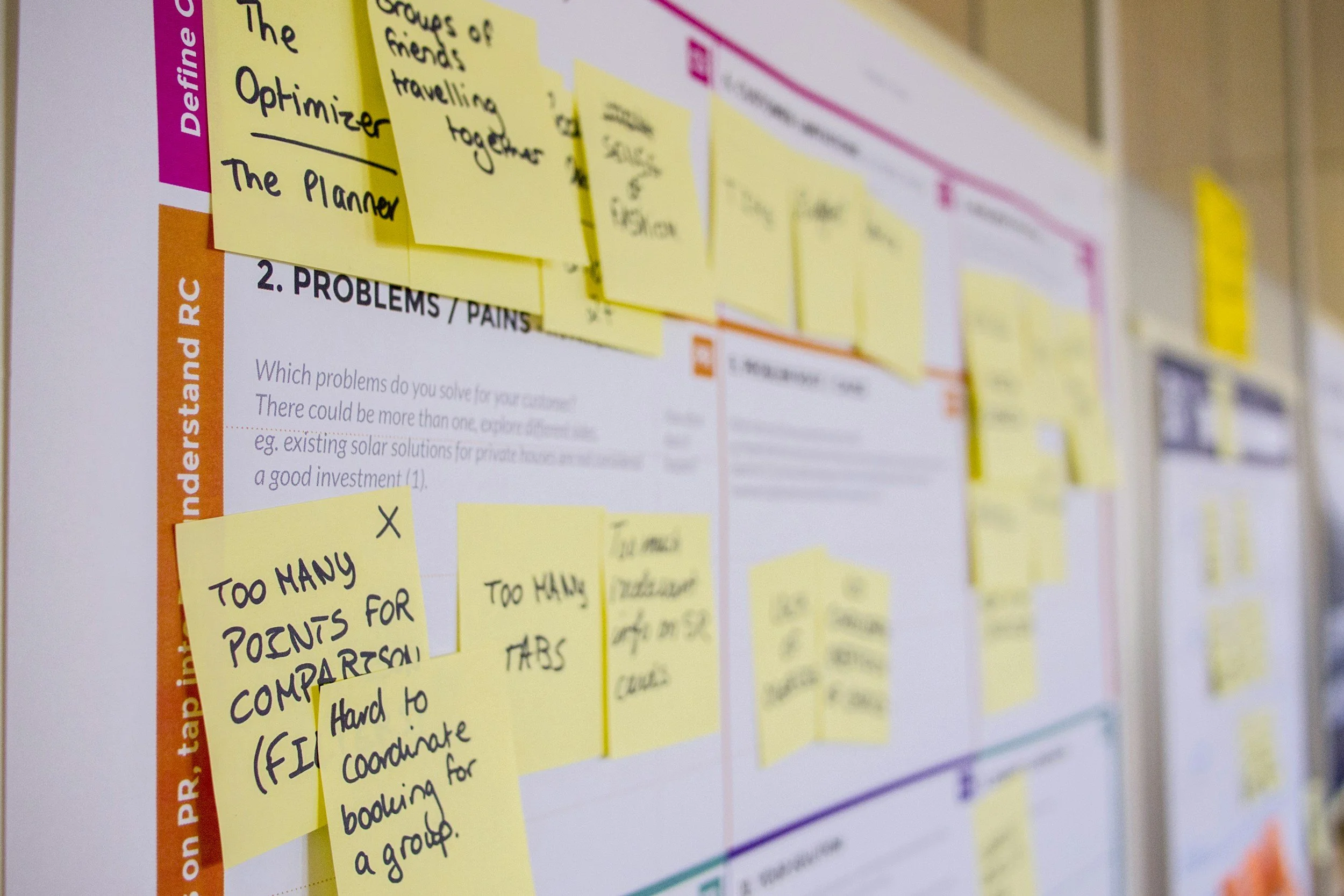
Depending on the engagement, we examine demand patterns, workload, capacity, staffing, workflows, responsibilities, management information, systems, financial assumptions, recurring bottlenecks, and the decisions management makes as conditions move away from normal.
We then distinguish between temporary variation and structural weakness. Not every busy period justifies permanent additional capacity, and not every slower period indicates a strategic problem. The important question is whether the current operating model can absorb reasonable changes in demand without creating disproportionate cost, operational disruption, management intervention, or customer risk.
Recommendations are therefore designed around the range of conditions the business realistically needs to handle. This may involve improving scheduling, creating more flexible capacity, redesigning a workflow, clarifying responsibilities, strengthening management indicators, adjusting financial assumptions, improving systems, changing the timing of an investment, or deciding that additional fixed capacity is not yet justified.
The objective is not to eliminate variability. It is to build an organization that can respond to variability without repeatedly losing operational control or strategic focus.
Where implementation is included in the engagement, Acumen can remain involved in translating those decisions into practical workflows, systems, documentation, management practices, and execution.
Our Service Process
Why Work With Acumen
Business resilience is not simply the ability to survive a difficult period.
A stronger business can adjust when demand, workload, staffing, customer activity, costs, or market conditions change without requiring every response to become an emergency management decision.
Achieving that usually involves more than one part of the organization. Capacity decisions affect costs. Staffing choices affect workflows. Technology affects information and coordination. Growth investments can improve capability but also increase fixed commitments. Financial assumptions that appear reasonable under one demand scenario may look very different under another.
Acumen connects strategy, operations, capacity, workflows, management structure, financial assumptions, systems, and implementation so these decisions can be evaluated together.
Our role is to help management determine which capabilities should remain stable, which resources need greater flexibility, where additional capacity is justified, and where the business may be taking on unnecessary fixed cost or complexity.
The objective is not to prepare for every possible scenario. It is to make the business more capable of responding to the range of conditions it can reasonably expect to face.
Acumen Business Consulting Inc. is a founder-led consulting firm based in London, Ontario. We work with businesses in Kelowna and across Canada through remote consulting, planning, documentation, advisory, and implementation support. When a project benefits from direct observation, workshops, operational reviews, or in-person collaboration, on-site client visits can also be arranged.
Frequently Asked Questions About Business Consulting in Kelowna
-
No. Acumen Business Consulting Inc. is based in London, Ontario. We work with Kelowna businesses through remote consulting, planning, documentation, advisory, and implementation support. When a project benefits from an on-site workshop, operational review, or direct collaboration, travel to Kelowna can also be arranged.
-
Acumen primarily supports small and mid-sized businesses, owner-led companies, professional service firms, startups, and growing organizations facing strategic, operational, process, systems, capacity, or growth challenges. The appropriate fit depends more on the business problem and required scope than on industry alone.
-
Yes. Depending on the business, this may involve capacity planning, workflow improvement, scheduling and coordination, management visibility, process documentation, business systems, financial assumptions, or clearer decision-making around changing demand.
-
Yes. Acumen can assess workflows, bottlenecks, handoffs, responsibilities, SOPs, management structure, capacity, and business systems to identify where improvements may increase consistency, visibility, efficiency, or operational resilience.
-
Yes, where implementation is included in the agreed scope. Depending on the engagement, this may include documentation, workflow development, systems work, digital implementation support, project coordination, or other defined deliverables.
Related Services




Build a More Resilient Business for Growth in Kelowna
If changing demand or growth is putting pressure on your operations, processes, systems, capacity, or management structure, Acumen can help identify the underlying constraints and determine the right next step.